News / News
10K race allocation
- When
- Sat, 28 November 2026
10K at the Erbe Lauf: how the race allocation works
Three 10K races, one course and the right start for every pace. We explain how we allocate participants to races C, B and A.
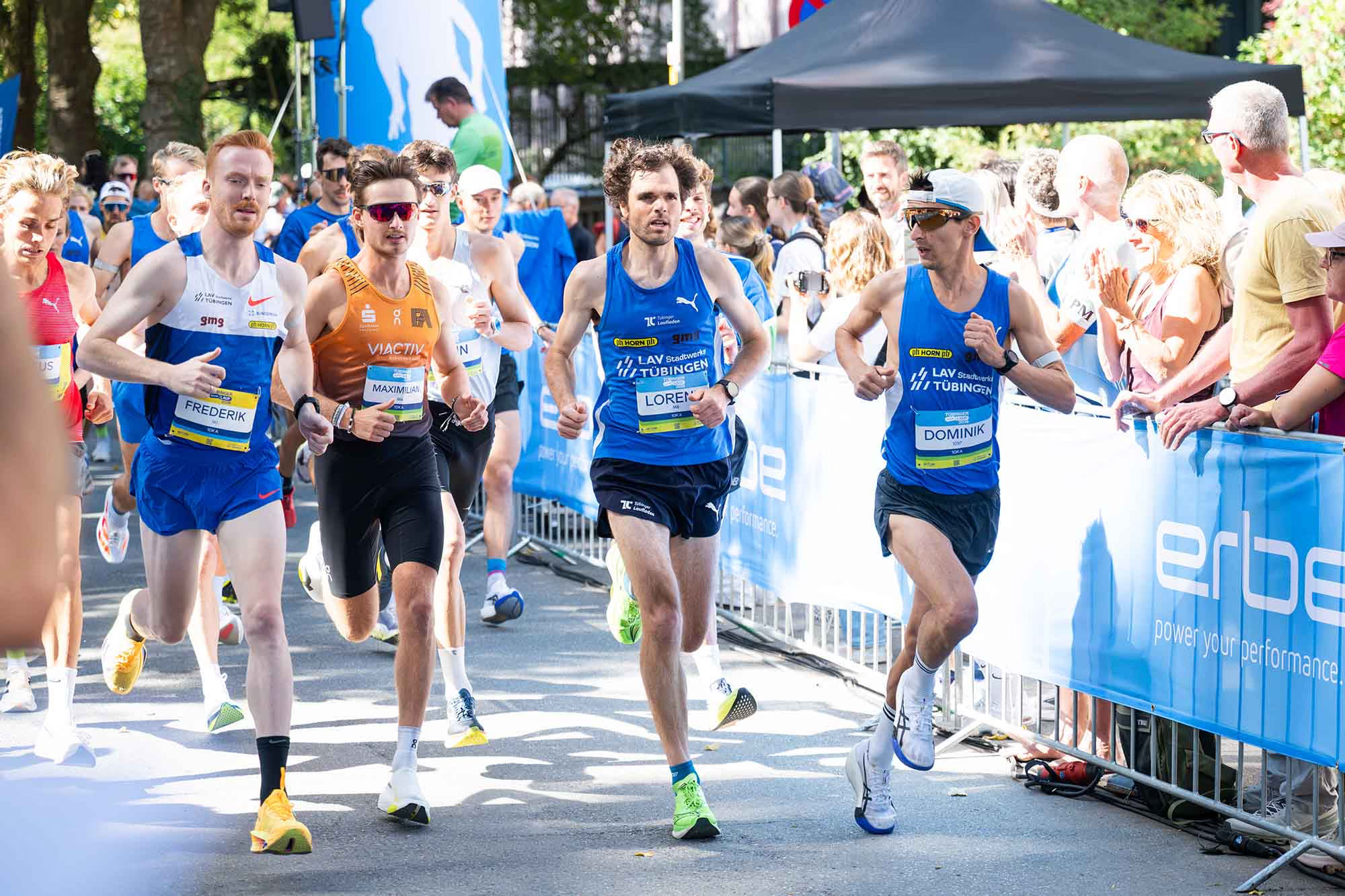
On Sunday, 19 September 2027, the Tübinger Erbe Lauf will start three 10K races for the first time. So that every race has a field that is as balanced as possible and everyone can run at their own pace, we allocate participants according to their expected finish time.
How the allocation works
- Enter your target time: When you register, you enter the time in which you expect to run the 10 kilometres.
- Sorting: About two weeks before the event, we sort all participants by their target time.
- Filling up: We fill the races from back to front. First comes race C with the longest target times, up to the participant limit, then race B. The fastest runners start in race A.
Why there are no fixed time limits
Each race has a participant limit. The boundary between the races therefore only emerges from all registrations and can shift from year to year. There is a reason why we start with race C: it keeps race A reserved for the really fast runners, who can run their pace there without being held up, and awkward overtaking of slower runners is avoided.
Our tip
Enter your target time as realistically as possible. That way you end up in a field that suits you and can enjoy your run. If you no longer remember what you ran in previous years, you can also look it up in our results.
You will receive your race allocation by email, together with the information on race pack pick-up, about two weeks before the event.